
Efficiency behind the scenes leads to magic on the stage.
In the high-energy world of hotel and resort entertainment, the biggest hurdle isn’t just finding talent—it’s the logistics. Scheduling is the foundation of a successful department. Without a solid organizational structure, even the most talented team can face friction, confusion, and burnout.
1. The Power of the Table Format
Managing evening performers, daily sports, and employee shifts is a daunting task. To keep it manageable, we must break it down into smaller, functional segments. The most effective way to do this is using a table format. This ensures clarity and allows every stakeholder to act accordingly.
2. The Two Major Divisions
Every entertainment schedule must be split into two distinct categories:
A. The Guest-Facing Program (External)
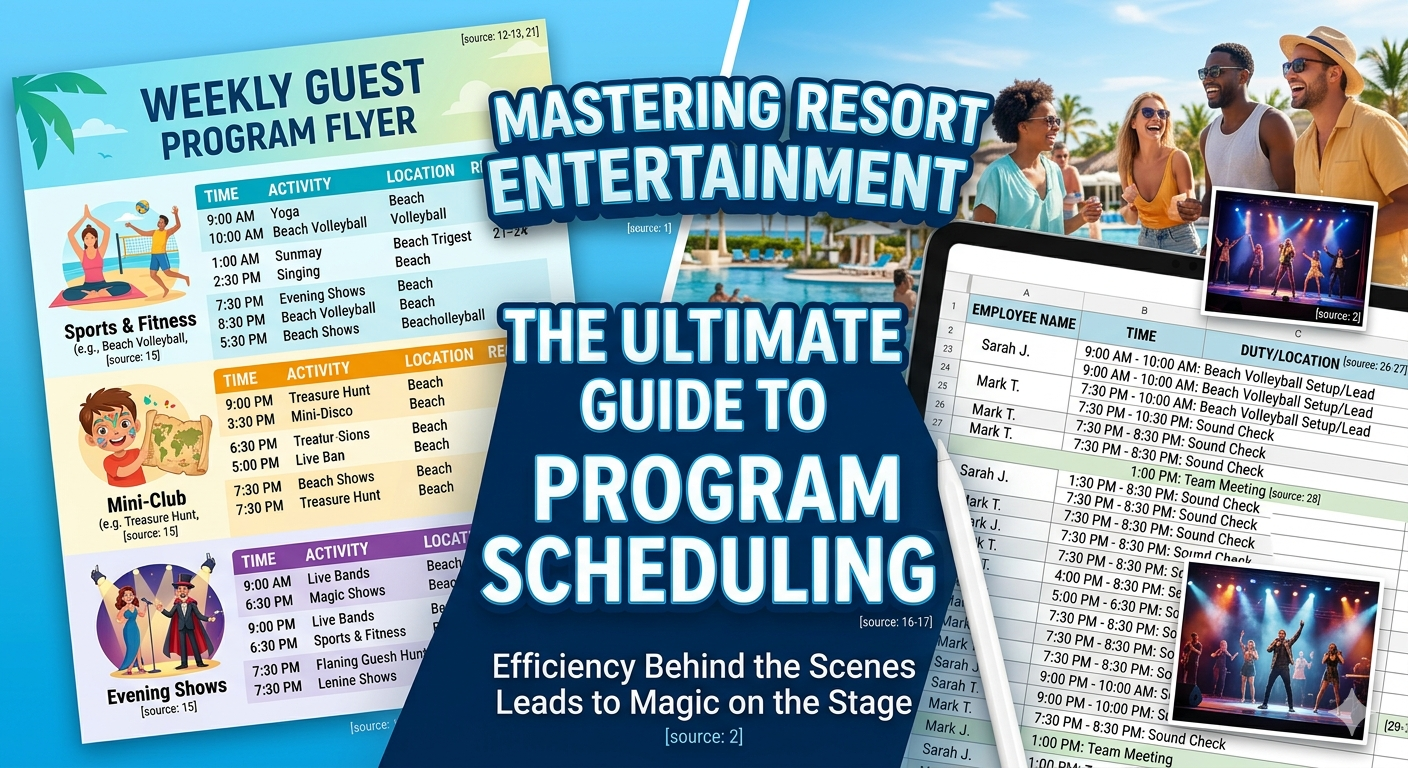
This is what the guest sees. It must be visually appealing, easy to read, and highly informative. These are usually displayed on information boards, TV screens, or printed as weekly flyers.
| Category | Typical Content | Example Activities |
| Sports & Fitness | Time, Location, Level | Yoga, Beach Volleyball, Water Aerobics |
| Mini-Club | Age Group, Activity, Duration | Face Painting, Treasure Hunt, Mini-Disco |
| Evening Shows | Show Title, Venue, Showtime | Live Bands, Magic Shows, Dance Musicals |
B. The Employee Schedule (Internal)
This is for the ‘eyes only’ of your staff. It manages the logistics of how the entertainment happens. It is split into two parts: working shifts/locations and internal events (like rehearsals or training).
3. Drafting the Perfect Weekly Schedule
All programs should be managed on a weekly basis. Here is what you need to include in each format:
- For the Guests:
- Day, Time, and Location: Be precise.
- Requirements: Does the activity require a reservation?
- Capacity: Are there participant limits?
- For the Staff:
- Individual Sections: Every employee needs their own row/column.
- Hour-by-Hour Breakdown: Exact locations and duties.
- Internal Events: Meetings, seminars, and training.
Pro Tips:
- Color Coding: Assign specific colors to categories (e.g., Blue for Sports, Yellow for Mini-Club) to help guests scan the flyer quickly.
- Logistical Buffers: Always schedule “internal events” like rehearsals or setup time before the showtime to ensure efficiency.
- Static vs. Dynamic Blocks: Use digital tools like Excel or Google Sheets to “hard-code” activities that never change so you only have to update rotating themes each week.
- Mobile Accessibility: Share a read-only digital link of the internal schedule so staff can check their duties on their phones in real-time.
Conclusion
The more organized you are with your foundations, the more freedom you have to be creative and engage with your guests. A solid schedule is the ‘silent partner’ of every successful Entertainer.