
Picture this:
The sun is rising over a bustling, five-star resort. Guests are heading to breakfast, music is starting to play by the pool, and a massive lineup of daily activities, kids’ clubs, and high-energy evening shows is about to unfold.
On the surface, a great resort looks like a seamless, effortless paradise. But behind the scenes? It’s a finely tuned machine that requires flawless communication to keep from descending into chaos.
In the fast-paced world of resort entertainment management, you can have the most talented performers and the best equipment, but without the right meetings, the entire operation can fall flat. Meetings aren’t just corporate obligations—they are the heartbeat of collaboration.
Here is a breakdown of the four essential types of meetings that keep a resort running smoothly and ensure every guest leaves with unforgettable memories.
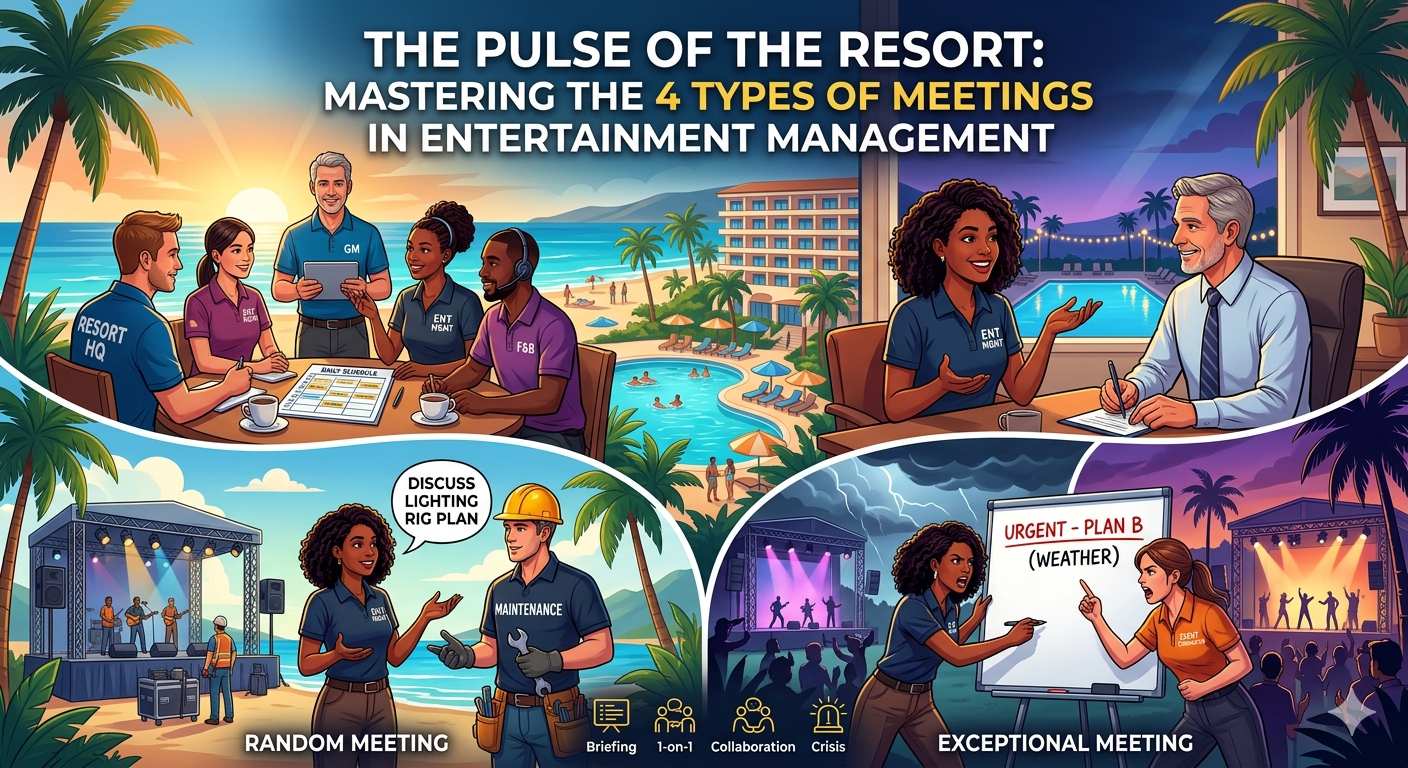
1. The Morning Briefing:
Aligning the Leadership Team
Set daily, these bright-and-early briefings are attended by all department heads and are spearheaded by the General Manager (GM). The core purpose is simple: complete situational awareness. Everyone gets a turn to speak, ensuring no department operates in a silo.As an Entertainment Manager, your contribution to this meeting is vital. You’ll provide a quick, sharp update covering:
- Team Readiness: Confirming all entertainment staff are accounted for, healthy, energized, and fit for work.
- The Daily Lineup: Highlighting daytime activities and reviewing attendance metrics from the previous day to see what’s buzzing.
- The Evening Spectacular: Pitching the nightly lineup—from the Mini Disco for the kids to the main stage event—so the entire resort knows what to promote to the guests.
2. The One-on-One with the GM:
Strategy and Support
While the morning briefing is a broad overview, the one-on-one meeting with the General Manager is where you dive deep. This private session allows you to step away from the noise and look at the bigger picture.In these meetings, you can dissect your entertainment schedule, openly discuss the department’s budgetary or logistical needs, and tackle sensitive issues or personnel situations that require the GM’s advice or approval. It’s your chance to align your creative vision with the resort’s overarching business goals.
3. The “Random” Meeting:
Fostering Inter-Departmental Chemistry
Not every meeting needs a formal agenda or the GM’s presence. “Random” meetings can happen at any time, anywhere on the property, between different department heads.Need extra lighting or a temporary stage adjustment? You sync up with the Chief Engineer. Want to coordinate a special themed cocktail for a beach party event? You grab the Food & Beverage Director. These agile, spontaneous touchpoints are the secret sauce of resort management, removing red tape and easing collaboration to bring creative concepts to life effortlessly.
4. Exceptional Meetings:
Crises and Rapid Response
In hospitality, the unexpected is a guarantee. Whether it’s a sudden thunderstorm forcing an outdoor evening show indoors, a technical blackout, or a last-minute VIP request, “Exceptional Meetings” are called as an immediate reaction to urgent situations.These meetings are fast-paced, highly dynamic, and intense. There is no time for long debates. As a leader, you must walk into an exceptional meeting ready to think on your feet, present rapid solutions, and outline immediate implementation steps to protect the guest experience.
Conclusion:
Communication is the Ultimate Amenity
At the end of the day, a resort’s success isn’t just measured by its luxury amenities or beautiful views—it is measured by the guest experience. And a flawless guest experience relies entirely on how well a team communicates. From the structured alignment of the morning briefing to the high-stakes adrenaline of an exceptional meeting, each touchpoint serves a vital purpose. By mastering these four types of meetings, entertainment managers can lead their teams with confidence, bridge the gap between departments, and ensure the show always goes on, flawlessly.